




Does a sniff count as a meal?
Inside DonutAI · 03

A sniff, a pause, a walk past the bowl—should any of them create an eating record? A user’s question and a review of 16 test clips help explain what that record should mean.
A cat walks over to the food bowl, lowers its head for a sniff, then turns away.
If an “eating” record appears on the owner’s phone, what will they take it to mean? Did the cat eat, or did it simply visit the bowl?
One owner taking part in DonutAI co-creation asked the group directly (translated from Chinese):
“Does it record that the cat ate, or does going over for a sniff or just passing by count too?”
The team replied: “It only counts when the cat eats. If a sniff is recorded, that may be a mistake.” The owner responded: “Okay, now I understand.”
That brief exchange established what a record should communicate. An eating label needs to correspond to the cat actually eating. Coming close to the bowl is not enough.
A pause beside the bowl may involve no eating
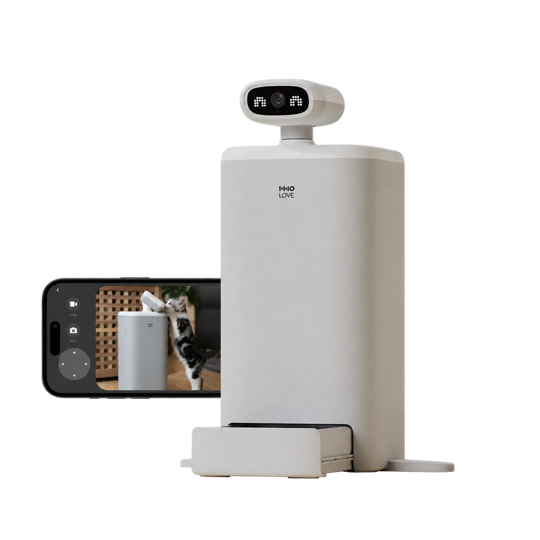
DonutAI is a standalone AI pet camera. Pointed at a food bowl already in the home, it needs to work out from the images what the pet is doing.

The bowl’s position is a clue. A lowered head is a clue, too. But owners know that cats sometimes come over to inspect their food, sniff, and walk away. A moment that looks like eating may involve no eating at all.

When watching a record back, an owner can look before and after that moment: how did the cat approach, what did it do while it paused, and how did it leave? Seeing the movements together helps explain what happened during the visit.
Looking closely at 16 “not eating” clips
Before this user exchange, the team had reviewed footage from the company’s internal test devices.
The concern was that actual eating might have been labeled “not eating.” The internal record described a review of the full duration of 16 clips carrying that label. For one test clip that was difficult to interpret, the reviewers also examined consecutive frames at their original resolution.
In that clip, the cat sniffed close to the bowl’s rim. Its mouth and nose did not enter the area containing the food, and it then left.
The movement happened beside the bowl, and the cat came very close for a moment. Looking at what came before and after it, however, the review found no clear eating action. Another 14 clips showed approaching, sniffing, or passing by. One clip contained no pet at all.
The review confirmed the “not eating” label for each of those 16 clips. That finding applies to the clips examined: the concern was that these clips contained eating the system had missed. After watching them through, the team found no evidence of that.
Keep a visit separate from a meal
For the cat that sniffed the rim and walked away, keeping the “not eating” result matched what the recording showed. Counting it as eating would add another record to the list while making the information less accurate for the owner.
This review therefore did not provide a reason to change the eating judgment. Its value was in resolving a suspected missed event without counting a visit as eating simply to produce more records.
The 16 selected clips also cannot represent performance in every home. In other co-creation feedback, owners still reported passing visits being recorded as eating. Those reports need separate investigation; this review of internal company test-device footage cannot answer them.
The opening question has a clear answer: sniffing or passing by should not, on its own, count as eating. In this review, the cat that sniffed and left was not counted as having eaten.
An owner opens the record to find out whether the cat ate. Keeping “visited the bowl” separate from “ate” gives that record its meaning.


Leave a comment